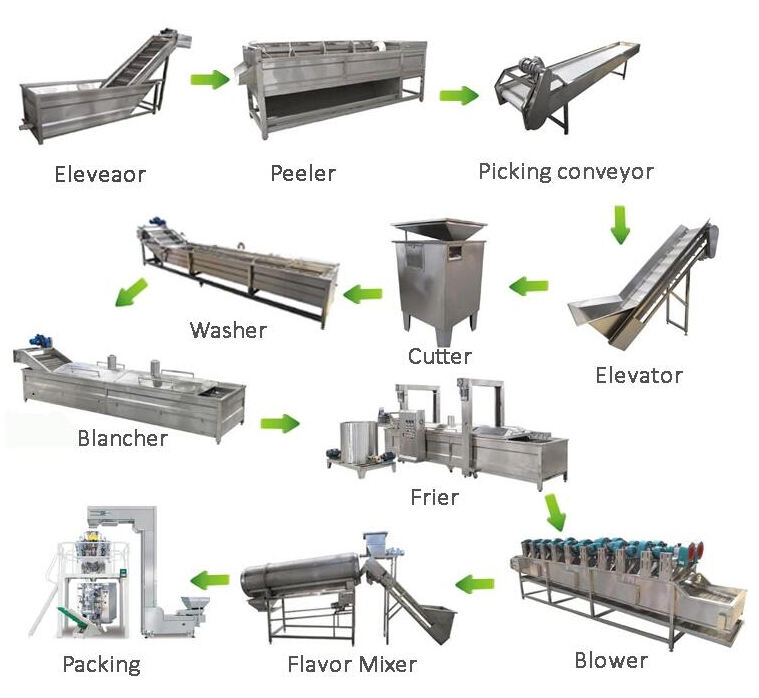
This week, the french fry processing equipment market maintained a moderate upward trend, with a differentiated pattern among equipment types: After the first round of price adjustments for semi-automatic lines, the downward pressure eased and shifted to stable fluctuations. However, limited profits for small-scale processors and the weakening demand from traditional fast-food chains restricted the space for the second round of increases. Fully automatic equipment, supported by high-efficiency production lines, saw a surge within the week. Yet, potato output in the second half of the year may peak and decline due to weather impacts. Coupled with repeated disruptions from global trade policies on agricultural imports, medium-term demand risks are gradually accumulating. In terms of equipment segments, fully automatic lines perform better than semi-automatic ones due to their stronger automation and export resilience. However, the growth rate of semi-automatic demand has slowed, and the momentum of inventory reduction has weakened. Coupled with suppression from anti-dumping policies in emerging markets, there is a lack of overall upward drive. At the macro level, the tone of international agricultural trade games and domestic policy support remains unchanged, and market sentiment is still cautiously optimistic. The current rumors of supply cuts have intensified the divergence between fully automatic and semi-automatic equipment. However, the supply of key components like cutting blades is abundant, and processors are cautious about replenishing inventories, providing limited support from the cost side. It is expected that equipment prices will remain volatile, and the divergence among types will continue.
TODAY’S INFORMATION: The International Potato Center’s Supply Stability Report: Climate and trade risks rise to top concerns. The International Potato Center released its semi-annual “Global Potato Supply Report”, indicating that the market is more sensitive to and concerned about climate variability and trade barriers. 68% of respondents listed “agricultural supply chain risks” as the top threat (up 50% from last year), and nearly half were worried about “policy uncertainties in imports”. The report highlights the risk of potato shortages escalating due to extreme weather after global warming intensifies, and claims that shifts in agricultural subsidies and international agreements are the main causes of supply fluctuations. Although the processing industry partially offsets the shocks (such as stabilization in frozen product lines and orderly operation of equipment markets), warned raw material prices remain high, and the leverage ratio of supply chains is approaching historical peaks, with risks still existing. India issues preliminary anti-dumping ruling on imported potato processing machinery involving China. August 22, 2025, India’s Ministry of Commerce and Industry issued Notice No. 45 of 2025 on potato processing equipment originating from China and Southeast Asia, making an affirmative preliminary ruling on anti-dumping, but not recommending provisional duties. The investigation continues, and the deadline for the final ruling is extended to within 18 months from filing. This case involves products under HS codes 8438.10.00 and 8438.80.90. Chinese Agriculture Minister: China will adopt more proactive and effective policies for food processing. On August 23, 2025, the FAO held its 142nd Development Committee meeting in Rome, Italy, reviewing the report “Food Security: Path to Sustainable Growth”. Chinese Agriculture Minister attended and delivered a speech. The minister pointed out that China is both a beneficiary and contributor to global food processing integration. In recent years, China’s contribution to global processed food growth has remained around 25%. Under the current complex external environment, China will adopt more proactive and effective macro policies to promote the achievement of annual growth targets and continue to bring stability and impetus to the global food industry. China adheres to the basic policy of opening up in agriculture. It has granted zero-tariff treatment to equipment from all developing countries with diplomatic relations. China is willing to further open its market to share its super-large-scale processing capacity with the world and achieve mutual benefit.